





- 페이스북
- 트위터
- 공유
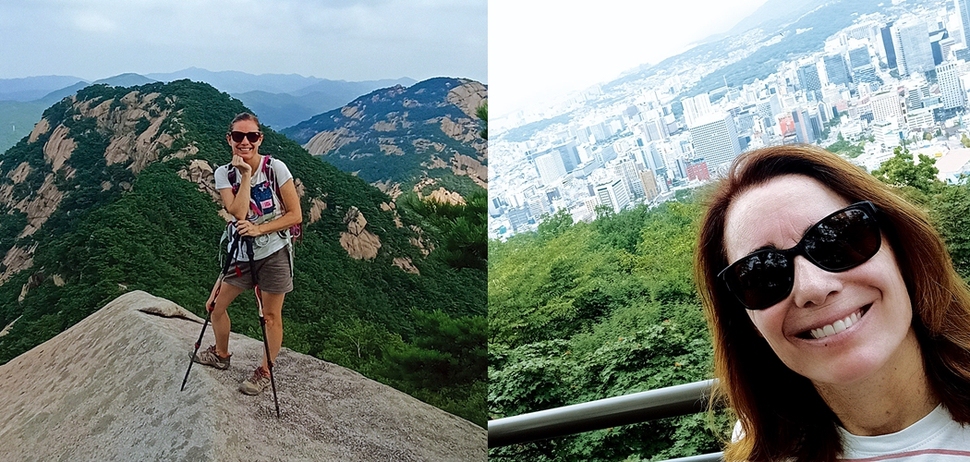
북한산 등산 중 만난 등산객이 찍어준 사진.(왼쪽) 서울에 도착한 첫날 더위를 피해 관광버스를 기다리며 사진을 찍었다. 남산타워 앞에서 서울 풍경을 배경으로 찍은 사진.
‘외국살이 서울살이’는 서울살이를 하는 외국인들이 겪는 여러 가지 이야기를 진솔하게 터놓는 열린 발언대입니다. seoul01@hani.co.kr로 투고 환영합니다. 편집자주
먼 옛날에 내린 한 가지 결정이 삶에 얼마나 큰 영향을 미칠 수 있는지는 정말 놀라운 것이라 생각합니다. 제게 있어서는 한글이 바로 그것이었습니다. 이 모든 것은 티브이(TV)를 몰아 보는 하룻밤을 보낸 뒤 화면에 케이(K)-드라마 광고가 뜨는 것으로 시작됐습니다. 몇 에피소드가 흘러나오자 저는 결심했습니다. 한글을 배워서 처음 읽는법을 다시 배우는 짜릿함을 경험하고 싶었습니다.
이 결심을 하고 얼마 지나지 않아 저는 어느새 스페인 마드리드공항의 대한항공 체크인 카운터에서 출국 수속을 하고 있었습니다. 이때까지만 해도 카운터 안내문에 있는 한국어를 거의 읽을 수 없었습니다. 긴 비행 끝에 서울에 처음 온 저는 높은 건물 사이에 숨겨진 산을 바라보며 김과 참기름의 달콤한 향을 음미하고 있었습니다.
한글이 저를 서울로 오게 한 원동력이었다면, 제가 등산했던 산들은 제가 한국어를 공부하고 한국어를 활용해 소통할 수 있게 만들었습니다.
서대문 근처의 산으로 모험을 떠나기까지 시간이 좀 걸렸습니다. 어느 날 안내소에서 받은 관광안내지도를 들고 인왕산 경사로로 성벽을 따라 올라갔습니다. 제 고향 테네리페는 등산로에서 만나는 등산객들이 서로에게 인사하는 문화가 있습니다. 모두가 인사하는 대서양의 섬, 테네리페에서 열렬히 하이킹했던 사람으로서 한국에서 등산하는 길에 만나는 사람들이 서로 “안녕하세요”라고 인사하지 않는 것이 이상하게 느껴졌습니다. 첫 번째 등산을 하던 중에 너무지쳐 저도 모르게 “너무 힘들어요”가 입에서 나와버렸습니다. 웃음을 터트리며 함께 등산하는 사람들로부터 한국어 표현 몇 개를 배운 뒤 너무 기뻐서 바보 같은 아이처럼 계속 그 표현을 사용했는데 효과가 있었습니다. 등산할 때 만났던 사람들의 영어 실력이 제 한국어보다 훨씬 좋았지만 등산로에서 알게 된 한국어 표현 두세 문장을 계속 반복하며 나눴던 의사소통을 통해 짜릿한 성취의 기분을 느꼈습니다. 그날 저는 아름다운 일몰을 본 뒤 조용히 도시의 불빛을 지켜보았습니다.
다음번에는 북한산을 등반하며 지금은 친구라고 부르는 사람을 만났습니다. 그 사람은 가파른 길, 산, 연못, 멋진 풍경 볼 수 있는 5시간짜리 등산로를 함께 가자고 제안했고, 함께 갔던 사람들과 함께 음식과 막걸리, 한국 역사의 이야기를 공유했습니다. 그렇게 저는 곧 산에 대한 공유된 사랑이 언어를 초월한다는 것을 알게 됐습니다.
마지막 날을 맞이했습니다. 이번에는 문화와 언어의 길잡이가 돼준 소중한 친구와 다시 한번 시간을 보내며 서울과 작별했습니다. 숨바꼭질 게임처럼 선로를 따라 불교 사원을 밟고, 고구마를 나누고, 보이지 않는 멧돼지와 끈질긴 모기를 피하는 등 마지막 시간을 즐겁게 보냈습니다. 그동안 우리는 한국어와 영어로 된 단어를 흩뿌리며 밤이 될 때까지 즐거운 대화를 나누며 맛있는 삼계탕을 먹으러 도시로 돌아왔습니다. 지금은 고향에 돌아와서도 서울의 산 중턱에서 보낸 추억을 음미하고 있습니다. 산티아고에는 ‘좋은 여정'이라는 뜻의 ‘부엔 카미노'라는 소중한 말이 있습니다. 그래서 서울 산을 오르는 분들께 ‘부엔 카미노'를 기원하며 앞으로 산책로를 따라 이야기를 나눌 기회가 있으면 좋겠습니다. 글·사진 몬세라트 페레라 알베르토(스페인) 번역 지은진(홈스테이 매니저) [원문] Learning Korean through the slopes of Seoul It’s impressive how one decision made far in the past can influence someone’s life that much. Hangul has been that for me. It all began with a K-drama ad popping up on the screen after a night of TV binge-watching. A few episodes in and I made up my mind: I wanted to learn Hangul and experience the thrill of learning how to read all over again. Before I knew it, I found myself at the Korean Air check-in counter in the Madrid Airport, barely able to grasp any Korean words. After a long flight, there I was, a first-timer in Seoul, savoring the sweet scent of seaweed and sesame oil while gazing at the mountains hidden among the tall buildings. If Hangul had brought me to Seoul, those mountains would help me speak the language. It took a while before I ventured into the mountains near 서대문. One day, I grabbed a map from a tourist information center and up I went, following the city wall along the slopes of 인왕산. As an avid hiker of an island in the Atlantic Ocean where everyone greets each other on the trail, it felt weird not to say “Hello” to the people on their way up. So, on my first encounter, while I was clinging to the first rope, an exhausted “너무 힘들어요” slipped from my mouth. After sharing a laugh and a few phrases in Korean, I felt so delighted that, like silly kid, I kept using the expression as an ice breaker all the way up—and it worked! Honestly, people’s English was much better than my Korean, but exchanging two or three sentences each time felt like a win. That day I quietly watched the lighting of the city after a spectacular sunset. The next time, after a futile attempt to ascend 북한산, we met someone that I now call a friend. There, he invited us to accompany him on a 5-hour hike through steep paths, mountains, ponds and gorgeous scenery, all while he shared his food, 막걸리and stories from Korean history. Just like that, I soon discovered that a shared love for the mountains transcends language. That brought me to my last day. I said goodbye to Seoul by hitting the trail once again, this time with a dear friend who’d become a guide in culture and language. We spent those last hours having a blast, following a track up like a game of hide and seek, stumbling upon a Buddhist temple, sharing 고구마, dodging both invisible wild boars and relentless mosquitoes. All the while we scattered words in Korean and English in a joyful conversation until the night brought us back to the city to a yummy 삼계탕. Now, back home, I still savor the memories of my time on Seoul's slopes. On El Camino de Santiago, there’s a cherished saying, 'buen camino,' meaning 'good journey.' So, to those hiking the Seoul mountains I wish you “Buen camino” and I hope we have the chance to share a chat along the trail in the future. Montserrat Perera Alberto mpereraalberto@gmail.com 편집자주) 번역글은 맥락 이해를 위해 의역 및 설명 내용 추가했음. 서울살이 길라잡이 서울앤(www.seouland.com) 취재팀 편집
마지막 날을 맞이했습니다. 이번에는 문화와 언어의 길잡이가 돼준 소중한 친구와 다시 한번 시간을 보내며 서울과 작별했습니다. 숨바꼭질 게임처럼 선로를 따라 불교 사원을 밟고, 고구마를 나누고, 보이지 않는 멧돼지와 끈질긴 모기를 피하는 등 마지막 시간을 즐겁게 보냈습니다. 그동안 우리는 한국어와 영어로 된 단어를 흩뿌리며 밤이 될 때까지 즐거운 대화를 나누며 맛있는 삼계탕을 먹으러 도시로 돌아왔습니다. 지금은 고향에 돌아와서도 서울의 산 중턱에서 보낸 추억을 음미하고 있습니다. 산티아고에는 ‘좋은 여정'이라는 뜻의 ‘부엔 카미노'라는 소중한 말이 있습니다. 그래서 서울 산을 오르는 분들께 ‘부엔 카미노'를 기원하며 앞으로 산책로를 따라 이야기를 나눌 기회가 있으면 좋겠습니다. 글·사진 몬세라트 페레라 알베르토(스페인) 번역 지은진(홈스테이 매니저) [원문] Learning Korean through the slopes of Seoul It’s impressive how one decision made far in the past can influence someone’s life that much. Hangul has been that for me. It all began with a K-drama ad popping up on the screen after a night of TV binge-watching. A few episodes in and I made up my mind: I wanted to learn Hangul and experience the thrill of learning how to read all over again. Before I knew it, I found myself at the Korean Air check-in counter in the Madrid Airport, barely able to grasp any Korean words. After a long flight, there I was, a first-timer in Seoul, savoring the sweet scent of seaweed and sesame oil while gazing at the mountains hidden among the tall buildings. If Hangul had brought me to Seoul, those mountains would help me speak the language. It took a while before I ventured into the mountains near 서대문. One day, I grabbed a map from a tourist information center and up I went, following the city wall along the slopes of 인왕산. As an avid hiker of an island in the Atlantic Ocean where everyone greets each other on the trail, it felt weird not to say “Hello” to the people on their way up. So, on my first encounter, while I was clinging to the first rope, an exhausted “너무 힘들어요” slipped from my mouth. After sharing a laugh and a few phrases in Korean, I felt so delighted that, like silly kid, I kept using the expression as an ice breaker all the way up—and it worked! Honestly, people’s English was much better than my Korean, but exchanging two or three sentences each time felt like a win. That day I quietly watched the lighting of the city after a spectacular sunset. The next time, after a futile attempt to ascend 북한산, we met someone that I now call a friend. There, he invited us to accompany him on a 5-hour hike through steep paths, mountains, ponds and gorgeous scenery, all while he shared his food, 막걸리and stories from Korean history. Just like that, I soon discovered that a shared love for the mountains transcends language. That brought me to my last day. I said goodbye to Seoul by hitting the trail once again, this time with a dear friend who’d become a guide in culture and language. We spent those last hours having a blast, following a track up like a game of hide and seek, stumbling upon a Buddhist temple, sharing 고구마, dodging both invisible wild boars and relentless mosquitoes. All the while we scattered words in Korean and English in a joyful conversation until the night brought us back to the city to a yummy 삼계탕. Now, back home, I still savor the memories of my time on Seoul's slopes. On El Camino de Santiago, there’s a cherished saying, 'buen camino,' meaning 'good journey.' So, to those hiking the Seoul mountains I wish you “Buen camino” and I hope we have the chance to share a chat along the trail in the future. Montserrat Perera Alberto mpereraalberto@gmail.com 편집자주) 번역글은 맥락 이해를 위해 의역 및 설명 내용 추가했음. 서울살이 길라잡이 서울앤(www.seouland.com) 취재팀 편집
서울& 인기기사
-
1.
-
2.
-
3.
-
4.
-
5.